
.jpg)
AMSAT SA
Registered as a non-profit company
Registration 2016/111111/08
Follow AMSAT SA on FaceBook https://www.facebook.com/AmsatSA00/
AMSAT SA
P O Box 90438
Garsfontein 0042
South Africa
Tel: 082 781 4631
Email:
admin@amsatsa.org.za



AMSAT SA Space Symposium 2025 Presentations

11 October now available
Next progreamme 25 October
Amateur Radio Today is
Sundays 10:00 CAT
7082 kHz
Mondays 18:30 CAT
3230 kHz
Quick links
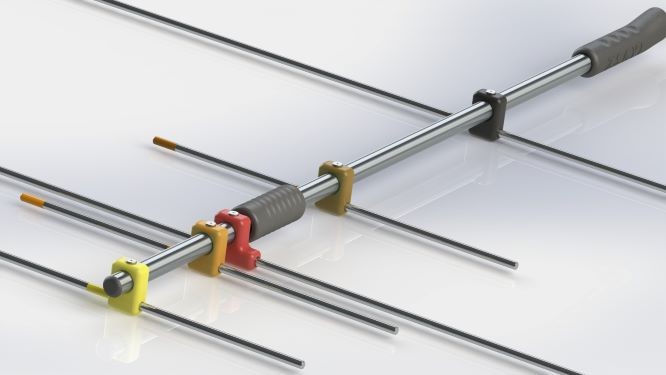
AMSAT SA Dual Band Yagi
Scroll down for more details on the Yagi
Order now while current stock lasts. New stock will be at a considerable higher price. Currently still at R450.
AMSAT SPACE SYMPOSIUM 2026
Saturday 1 August 2026
Radio Amateurs take propagation forecasting to an amazing local level
HamSCI is developing a dashboard display specifically for amateur radio HF contesting, DXing, and general operations using data from the HamSCI Personal Space Weather Station as well as potentially adding other local and remote real time data. The HamSCI Personal Space Weather Station is a multi-instrument system designed to measure space weather for both scientific research and amateur radio operations. The core of the PSWS is the RX-888/ KA9Q-radio WSPRDaemon-Grape High Frequency (HF) software-defined radio (SDR), capable of capturing and analysing signals across the 0.3-30 MHz range. While most PSWS development efforts thus far have focused on strictly scientific objectives, this project aims to make the data available and useful in real time for radio amateurs. The dashboard has a goal of enhancing real-time HF propagation assessments for amateur radio operators. By decoding Weak Signal Propagation Report (WSPR) spots and integrating with external space weather observations, this dashboard will provide propagation insights on an individual station basis. The dashboard will also contribute to a larger understanding of both localized and global HF conditions. This should allow amateur radio operators to optimise their transmissions based on real-time ionospheric conditions, which can help improve contesting efficiency and DXing success. Currently, this project is under development with a working prototype.
Read the full article in HamSCI Newsletter here
Make Meteor Scatter Communication your next Amateur Radio Project with Derek Gravett ZS5Y
Have you ever imagined bouncing your signal off a shooting star? As radio amateurs, we don’t have to rely on satellites or repeaters to reach distant stations—sometimes, the natural phenomenon of meteors blazing through our atmosphere gives us the perfect reflector. This fascinating technique is called meteor scatter communication.
You can watch a recording of the webinar on You Tube click here
Derek Gravett ZS5Y will be introducing you to MSK144, one of the most effective digital modes designed specifically for this purpose.
MSK144 is part of the WSJT-X suite developed by Nobel laureate Joe Taylor, K1JT. It uses fast, efficient minimum-shift keying to capture those fleeting bursts of reflected signals from meteor trails—bursts that may last only fractions of a second! With this mode, VHF and UHF operators can achieve contacts of 500 to 2,000 kilometres or more, even when the bands seem completely dead.
In this presentation, we’ll explore how meteor scatter works, why MSK144 has become the preferred mode for modern operators, and the practical setup you need to start making your own ‘cosmic’ contacts. By the end, you’ll see how a simple meteor can become your best friend on the airwaves."
Donate to the
AMSAT SA Satellite fund. Enter the amount you wish to contribute in
Rand. AMSAT SA responds
to AMSAT-DL request for expression of interest (RFEI)
AMSAT- DL in
conjunction with the European Space Agency (ESA) invited AMSAT
organisations to participate in their Future GEO initiative. (ESA).
AMSAT SA on Friday last week responded to the AMSAT- DL RFEI with some
interesting ideas
For the past few
Monday evenings discussions were held on the AMSAT SA Webex video
conference platform resulting in interesting proposals. Beside
recommending that an uplink on the 4.7 GHz be considered in addition to
the current OSCAR frequencies to increase the available bandwidth, the
proposal also includes an innovative system that will operate on a
similar basis as Echo link but on the proposed new geostationary amateur
satellite. Currently some development has started of which the outcome
will be presented at the AMSAT SA Space Symposium to be held on Saturday
2 August. Another AMSAT SA proposal a ground-based system to link LEO
satellites with the new GEO satellites that will give repeater users
access to the GEO satellite and other amateurs operating within its
footprint.
The ESO and
AMSAT – DL initiative is a direct response to increasing
global interest in amateur satellite communications and aims to inspire
new generations through access to space-based amateur radio platforms.
You can followed elopement on
www.amsatsa.org.za.
Previous conference
presentations
Presentation by Dr Gary Immelman
ZS6YI
AfriCUBE Challenging the limits
Presentation by Anton Janovsky
ZR6AIC
AMSAT
SA Dual band 70cm/yagi Mark III
AMSAT SA has launched Mark III of is dual band 70cm/2m handheld beam
antenna with a new, easier to hold handle and improved coaxial
terminations. The Yagi has been retuned for maximum performance in the
amateur radio 2 m and 70 cm satellite bands.
The coax cable is terminated crimped brass lugs instead of being
soldered making it environmental more robust. The driven element has
been adjusted to accommodate the change in the connection.
More about the Yagi
The antenna has a 50-ohm designed driver. The Yagi has a
unique element called a ‘Open Sleeve’ which is a director very close to
the driven element. The driven element is sized for 2M. When
operating on 70cm the ‘Open Sleeve’ acts as part of the driven element
on 70cm (Third harmonic of 2M).
The original concept was developed in 1946 by Dr J T Bolljahn of the
Stanford Research institute but was not introduced into amateur radio
until the 1950s. The AMSAT SA version is based on a design by DK7ZB with
modifications by WB5CXC.
The first South African version was a collaboration between Guy Eales
ZS6GUY and Dr Gary Immelman ZS6YI. It was developed for YOTA 2018 where
young people successfully used the antenna operating satellites using
hand-held transceivers.
The mechanical structure was redesigned by Dr Gary Immelmann ZS6YI. A
choke around the boom was added to isolate the antenna from the coax and
reduce the effect human contact has on the antenna. A handle was added
on the boom end which makes it more comfortable to hold and further
isolates the antenna from the handler. The AMSAT SA yagi is
manufactured in one of Dr Immelmann’s
factories in Vereeniging. It has two elements on 145 MHz and 3
elements on 435 MHz.
For its size the antenna has excellent gain:
145 MHZ: 4.12 dBd or 6.3 dBi
435 MHz: 6.23 dBd or 8.4 dBi
The Yagi is broadband with measured SWR as follows and almost flat over
the entire bands
The antenna is plug and play. No tools are needed except for soldering
on a connector to suit the application. It comes complete in a carry bag
with full instructions. This antenna can be assembled and dissembled in
minutes.
The price of the MKIII Yagi is R450 for AMSAT SA and SARL members.
Non-members pay R500. The courier charge is R150 (Postnet to
Postnet) Ask for a quote for other courier options. Get order form
here


Amateur Radio Today
A weekly one-hour radio programme about Amateur Radio, SWL, Electronics and Technology
SARL NEWS 18 October 2026
SARL NEXT GENERATION BEACON CROWD FUNDING
Current Fund R30 400
visit the SARL beacon page here Beacon
The SARL has provided funding for the first beacon.
However, the project will have to rely on crowd funding to accelerate
the project. AMSAT SA has launched a crowd funding project on behalf of
the SARL VHF work group.
Contributions can be made by clicking on the pay button for R50,
R250 or R1000. Your contribution is appreciated and will be
acknowledged.
R50

R250
R1000.00
Thank You. You can make it happen!
AMSAT SA SUPPORTS SARL NEXT GENERATION BEACON PROJECT
VHF and UHF radio propagation remains a mystery; even tropospheric and sporadic-E propagation are not fully understood, with new long distance communication distance records being broken.
The enquiring nature of radio amateurs has over many years resulted in informal research with setting up beacons and monitoring signals. But this hand-to-mouth way of doing this has not really delivered the kind of data to make meaningful and scientific findings. All it’s really is showing is that long distance communication of frequencies above 30 MHz is possible and does regularly occur. The answer to the conundrum is to set up a reverse beacon network to monitor beacons. Reverse beacon monitoring has always been a major requirement for monitoring a beacon and has been discussed over the past two-plus years at various workshops arranged by the SARL and AMSATSA. The initial outcome of these deliberations was to monitor CW beacons using software like CW skimmer, but experience gained through actual testing has shown a number of flaws with this approach. The major flaw is that CW skimmer software is not 100% reliable when it comes to decoding. It requires a fairly strong signal before the software actually begins decoding the received CW signal. Aural reception of a weak CW signal can already take place way before the skimmer software starts to decode the signal. These findings encouraged members of the SARL VHF work group to start experimenting with digital modes like FT8 and JS8Call on VHF and UHF, and they found that the reception and reporting of the signals heard could take place at very low levels. This therefore seems to be a much better solution for a beacon than continuing with a traditional CW beacon.
Get the full story here